
Wabi-Sabi — L'élégance de l'imperfection

« Le Wabi-Sabi nourrit tout ce que mon travail cherche à exprimer : une beauté silencieuse, imparfaite, marquée par le temps. »
Il existe au Japon un concept esthétique et spirituel difficile à traduire, mais d’une grande profondeur : Wabi-Sabi. Deux mots anciens, qui ensemble décrivent une manière de voir le monde — et de l’aimer.

Wabi, c’est la simplicité rustique, le dépouillement, la beauté qui naît de la sobriété, du silence, de l’espace laissé vide.
Sabi, c’est la trace du temps, la patine des choses usées, la mélancolie douce de ce qui a vieilli avec grâce.
Ensemble, Wabi-Sabi célèbre ce que notre culture oublie souvent : le rugueux plutôt que le lisse, l’incomplet plutôt que le parfait, l’éphémère plutôt que l’éternel.
Cette vision m’a profondément influencé lors de mes voyages au Japon.
Dans les sanctuaires shinto, au détour d’un torii moussu, d’un arbre centenaire ou d’un autel oublié dans la forêt, j’ai ressenti cette présence fragile et discrète du Wabi-Sabi.
Elle ne se montre pas. Elle se devine.
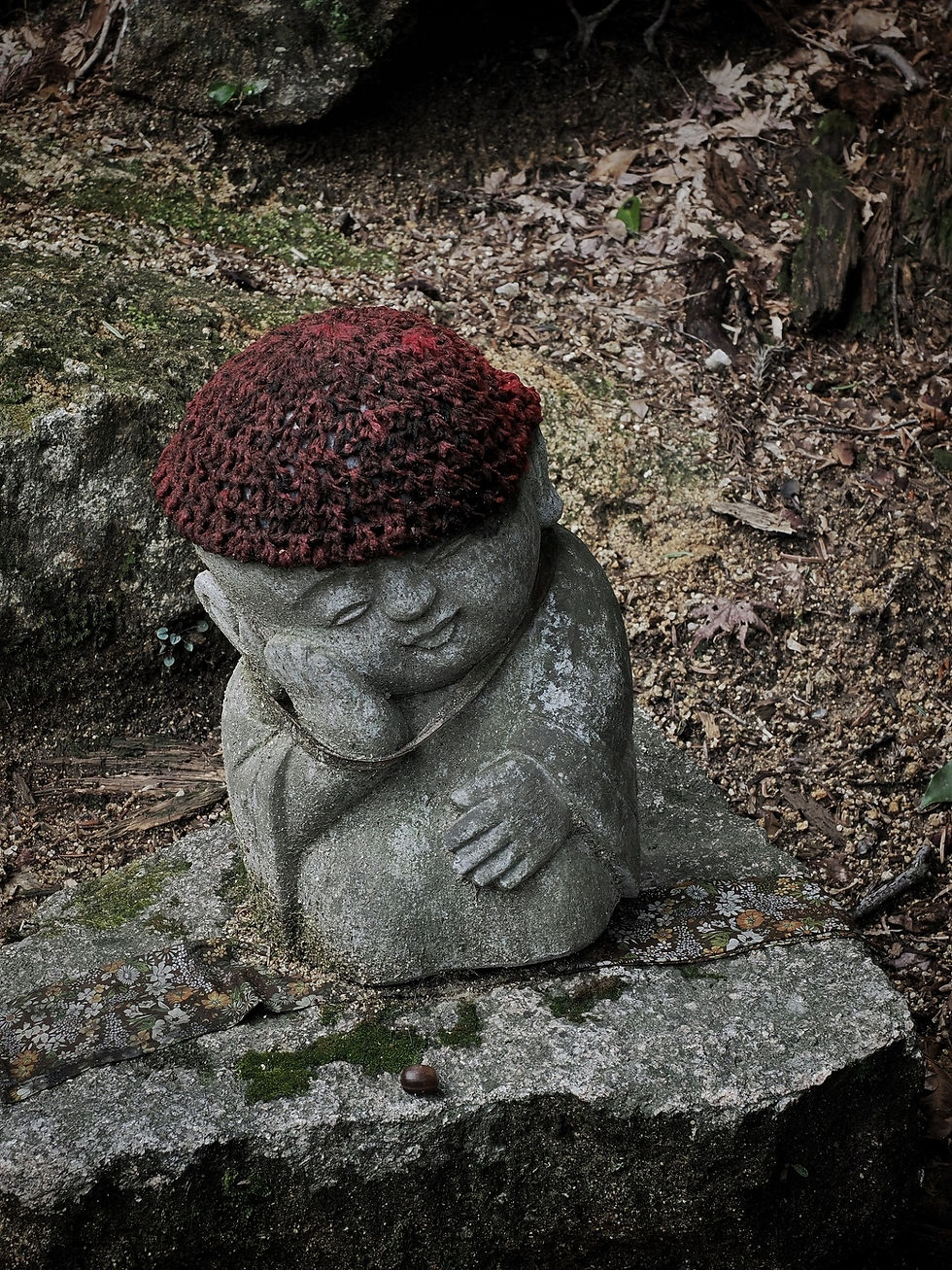
Ma série photographique Shinto, réalisée au Japon, est une tentative de dialogue avec cet esprit.
Je n’ai pas cherché à « capturer » la beauté. J’ai attendu qu’elle se laisse approcher.
Une pierre fendue, un chemin effacé, un bois vieilli par la pluie : chaque image est une offrande à cette esthétique du silence et de la retenue.

Dans un monde obsédé par la vitesse et la perfection, le Wabi-Sabi nous invite à ralentir.
À regarder autrement.
À honorer ce qui est simple, fragile, authentique.
Et peut-être, à nous réconcilier avec notre propre imperfection.
Vous pouvez retrouvez cette série exposée en ce moment dans le cadre du festival estival Chemins de Photos dans la commune de Belpech dans l'Aude (le long de la rivière, en plein air et c'est très beau à voir) ainsi qu'en version plus courte au restaurant Izakayan d'Arles aux heures d'ouverture du restaurant !
And in english
"Wabi-Sabi nourishes everything my work seeks to express: a silent, imperfect beauty marked by time."
In Japan, there exists an aesthetic and spiritual concept that is difficult to translate, yet rich in depth: Wabi-Sabi. Two ancient words that, together, describe a way of seeing the world — and of loving it.
Wabi is rustic simplicity, minimalism, the beauty that arises from sobriety, silence, and empty space.Sabi is the trace of time, the patina of worn things, the soft melancholy of what has aged with grace.
Together, Wabi-Sabi celebrates what our culture so often forgets: the rough over the smooth, the incomplete over the perfect, the ephemeral over the eternal.
This vision has deeply influenced me during my travels in Japan.
In Shinto shrines — at the turn of a moss-covered torii gate, near an ancient tree, or before a forgotten altar in the forest — I felt the subtle and fragile presence of Wabi-Sabi.
It does not show itself.
It is sensed.
My photographic series Shinto, created in Japan, is an attempt to enter into dialogue with this spirit.I did not try to capture beauty. I waited for it to come closer.
A cracked stone, a fading path, wood weathered by rain — each image is an offering to this quiet and restrained aesthetic.
In a world obsessed with speed and perfection, Wabi-Sabi invites us to slow down. To see differently.
To honor what is simple, fragile, and authentic.And perhaps, to reconcile with our own imperfections.


https://ok9.africa/ dạo này mình thấy có người nhắc tới khi nói về các nền tảng giải trí trực tuyến nên cũng thử mở vào xem cách họ bố trí giao diện ra sao. Mình không đi sâu vào nội dung hay từng trò cụ thể, mà chủ yếu quan sát cách các chuyên mục được phân chia trên trang và cách thông tin hiển thị cho người dùng. Nhìn tổng thể thì các khu như thể thao, casino, game bài hay slot thường được sắp xếp theo từng nhóm khá rõ, hiển thị dạng khối và danh sách nên lướt qua cũng dễ theo dõi. Các bảng dữ liệu được trình bày dạng cột khá gọn, giúp quan sát nhanh…
vipwin co mình thấy dạo này nhắc nhiều quá nên cũng ghé thử cho biết, kiểu vào xem trang chủ họ làm ra sao thôi chứ chưa kịp chơi gì. Vừa mở lên thấy giao diện khá sáng sủa, bố cục chia khối nhìn dễ chịu nên lướt một vòng không bị rối. Mình để ý họ có nói chuyện truy cập đôi lúc bị vướng do quy định mạng ở Việt Nam, nên phần thông tin về link mới nhất được đặt khá nổi, tìm không mất công. Mấy mục trên đầu trang cũng sắp xếp gọn, bấm qua lại không bị lạc. Nói chung cảm giác như họ ưu tiên cho người mới vào xem nhanh là hiểu,…
Cakhia TV mình thấy nhiều người nhắc nên hôm bữa rảnh bấm vào nghía thử cho biết. Mình không xem kỹ nội dung đâu, chủ yếu tò mò giao diện họ làm ra sao thôi. Vừa vào là thấy trang nhìn khá thoáng, không bị nhồi chữ hay dồn quá nhiều thứ một chỗ nên lướt nhẹ nhàng. Mấy phần thông tin được chia thành từng khối rõ ràng, kéo xuống vẫn biết mình đang ở đoạn nào chứ không bị lạc. Mình cũng để ý thanh menu đặt ngay chỗ dễ thấy, bấm qua lại vài mục khá nhanh, không phải mò. Nói chung cảm giác kiểu “vào là hiểu”, vì bố cục chia khối gọn và menu điều…
tk999 showed up in my feed a couple times, so I poked around out of curiosity to see how the site’s laid out. It’s got that “made for phone first” vibe, but it doesn’t fall apart when you switch to a browser—stuff stays readable and the buttons aren’t jammed together. I noticed they talk about keeping multiple backup access links and something like 99.8% uptime, and honestly that tracks with how steady it felt while I clicked between pages. I wasn’t digging deep into the games or anything, just skimming, and the info is broken up in a way that’s easy to scan. The headings are clear and the text sits in these neat little blocks instead of one long…
JW88 mình có ghé thử cho biết, kiểu vào xem giao diện thôi chứ không có ngồi mò lâu. Ấn tượng đầu là trang tải khá nhanh, bấm qua lại mượt nên dùng trên điện thoại cũng đỡ bực vì không phải chờ quay vòng mãi. Mình thích cái cách họ làm bố cục nhìn phát hiểu liền, các mục được gom nhóm rõ ràng nên không bị rối mắt. Lướt xuống thấy phần nội dung chia thành từng khối gọn gàng, tiêu đề nổi vừa đủ để biết đang ở khu nào, không cần căng não tìm. Trên màn hình nhỏ vẫn giữ được thanh điều hướng và các block xếp ngay ngắn, chữ không bị bé tí hay…